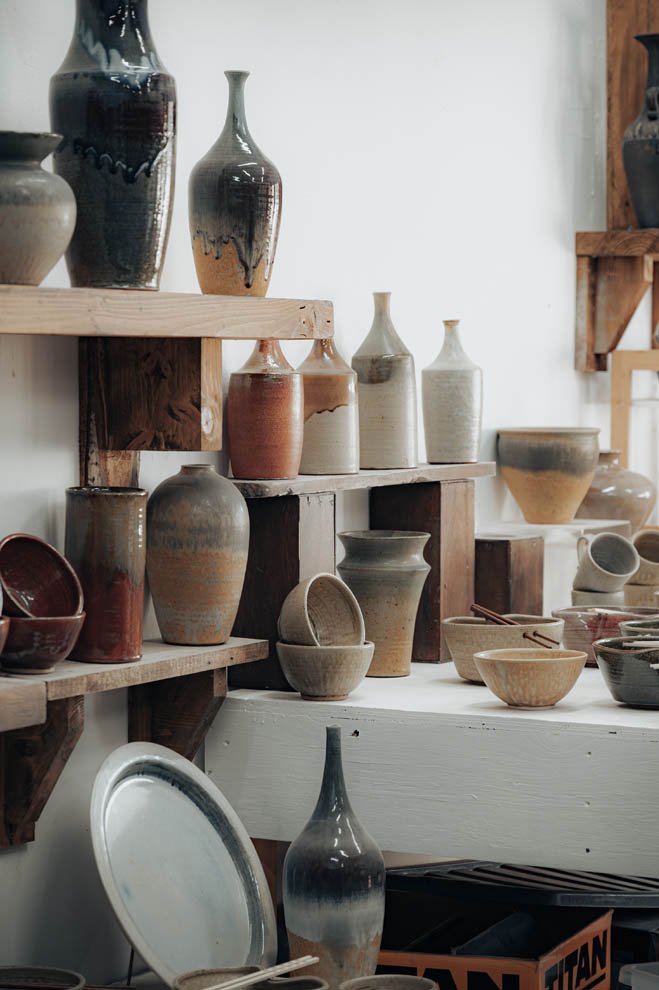
A studio built around craft, process, and everyday use.
The Potter of Leith is a pottery studio and ceramic shop based in The Pitt in West Granton, creating handcrafted pieces designed to be lived with, used daily, and appreciated over time.
Alongside the ceramic collection, The Potter of Leith also runs small-group pottery courses and workshops, offering a welcoming space for people to learn, experiment, and connect with the craft of ceramics for themselves.
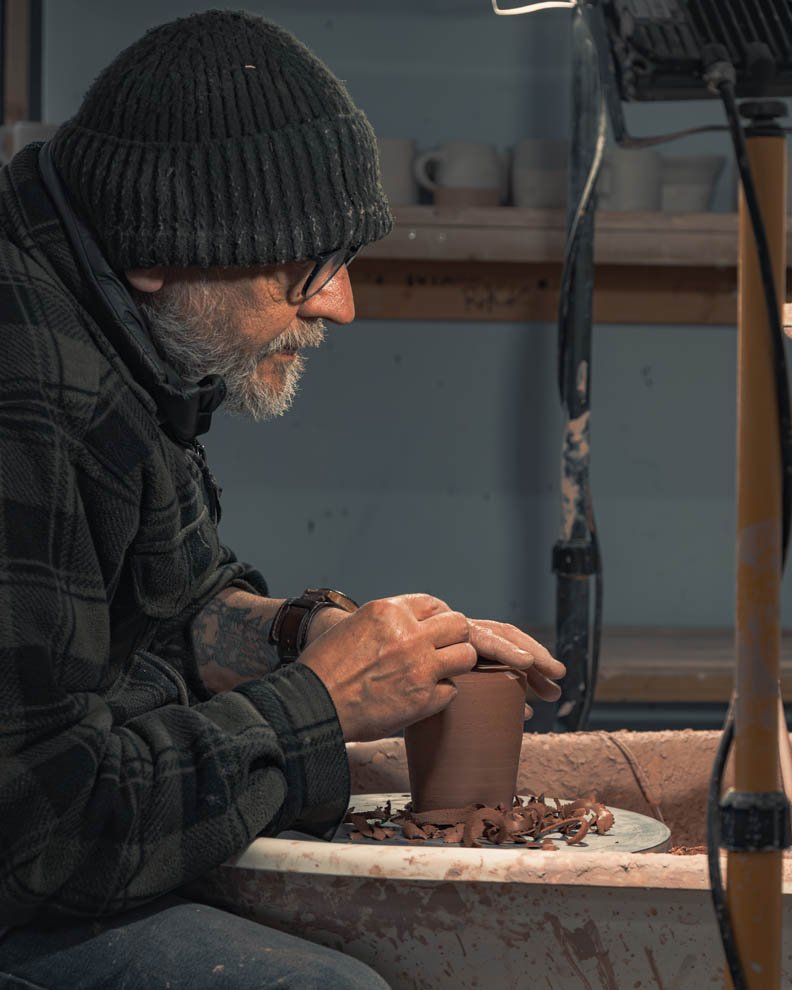
Andy Lang - The Potter of Leith
My name is Andy Lang (AKA the Potter of Leith) and I am the instructor of the courses at Leith Community Pottery. I gained my Bachelor’s Degree at Duncan of Jordanstone College of Art, Dundee. Since then, I have worked as a songwriter and in health & social care, but all this time, I never gave up teaching pottery. In my classes, besides teaching the techniques of throwing on the wheel, I also aim to pass my passion for pottery on to my students.
View Courses Find out moreReduction Firing in our Gas Kiln
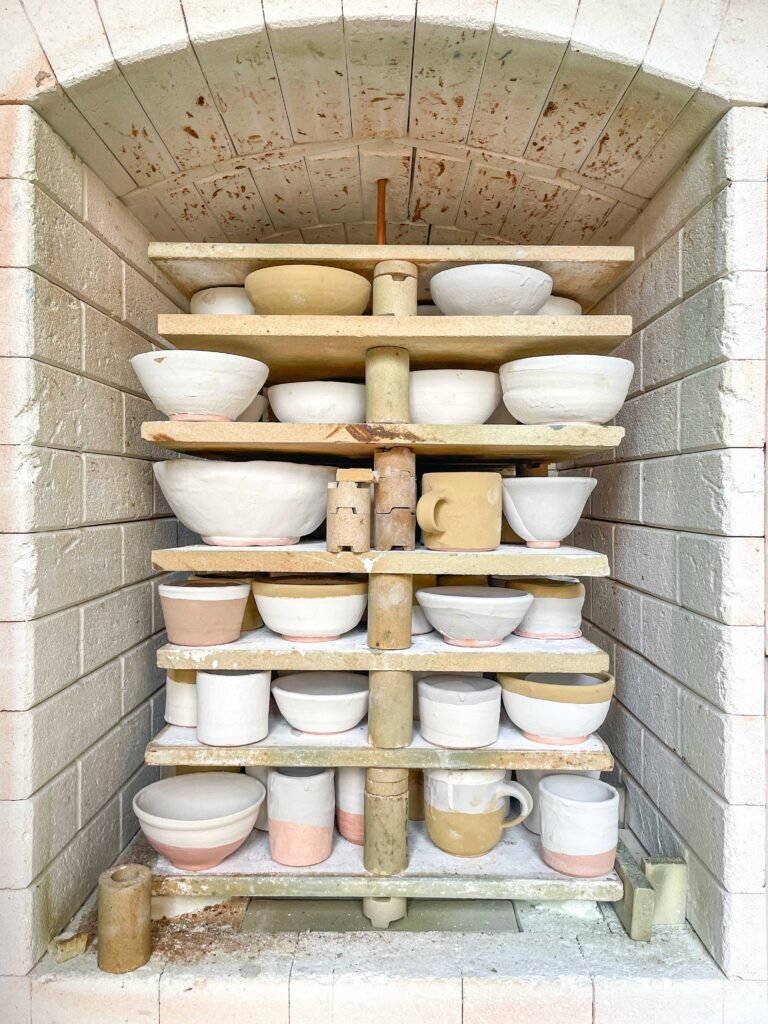
Leith Community Pottery is home to a unique, gas-fired reduction kiln, one of very few in Edinburgh. It was custom built in 2020 by Northern Kilns.
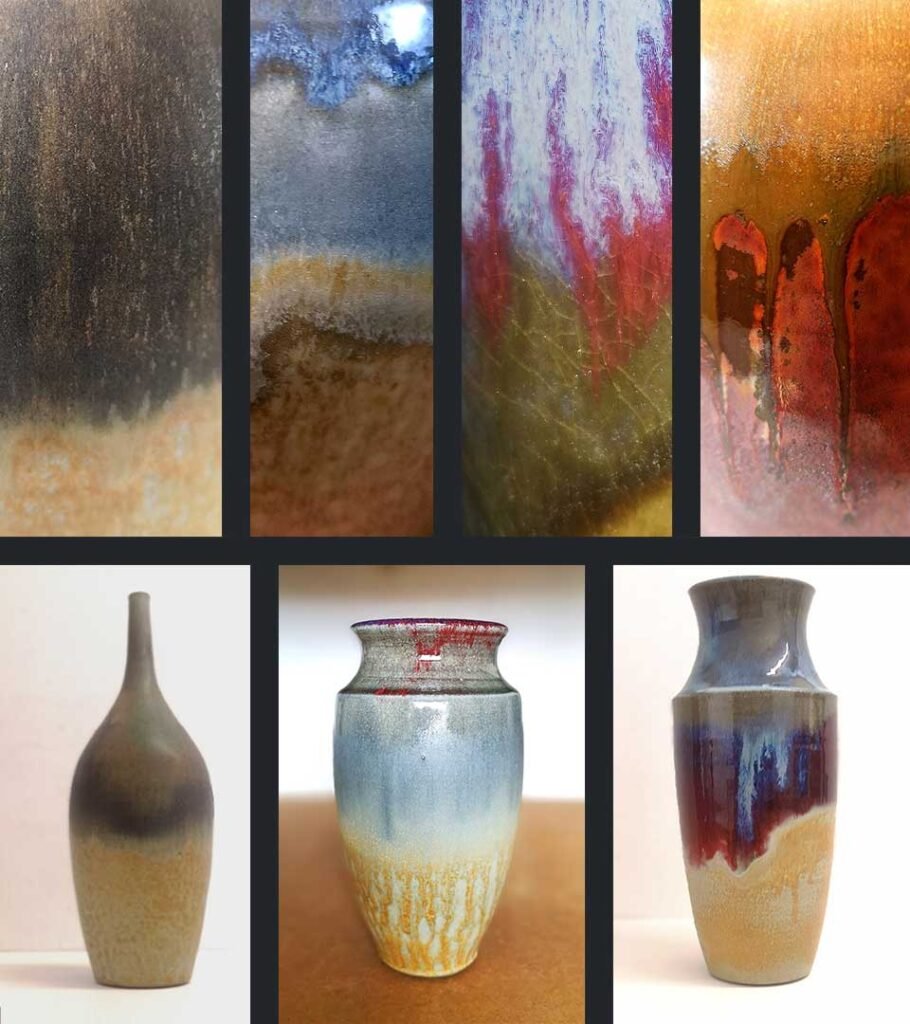
Reduction is a highly specialised and increasingly uncommon technique, used to produce unique and inimitable glazes and finishes in ceramics.
Reduction requires the presence of actual fire / flames, which thrive on oxygen.
When, at a particular stage of firing, we starve the kiln of oxygen, we force the fire to seek it elsewhere and so it will reach into the glaze materials and the clay body itself, stealing and feeding on available oxygen atoms.
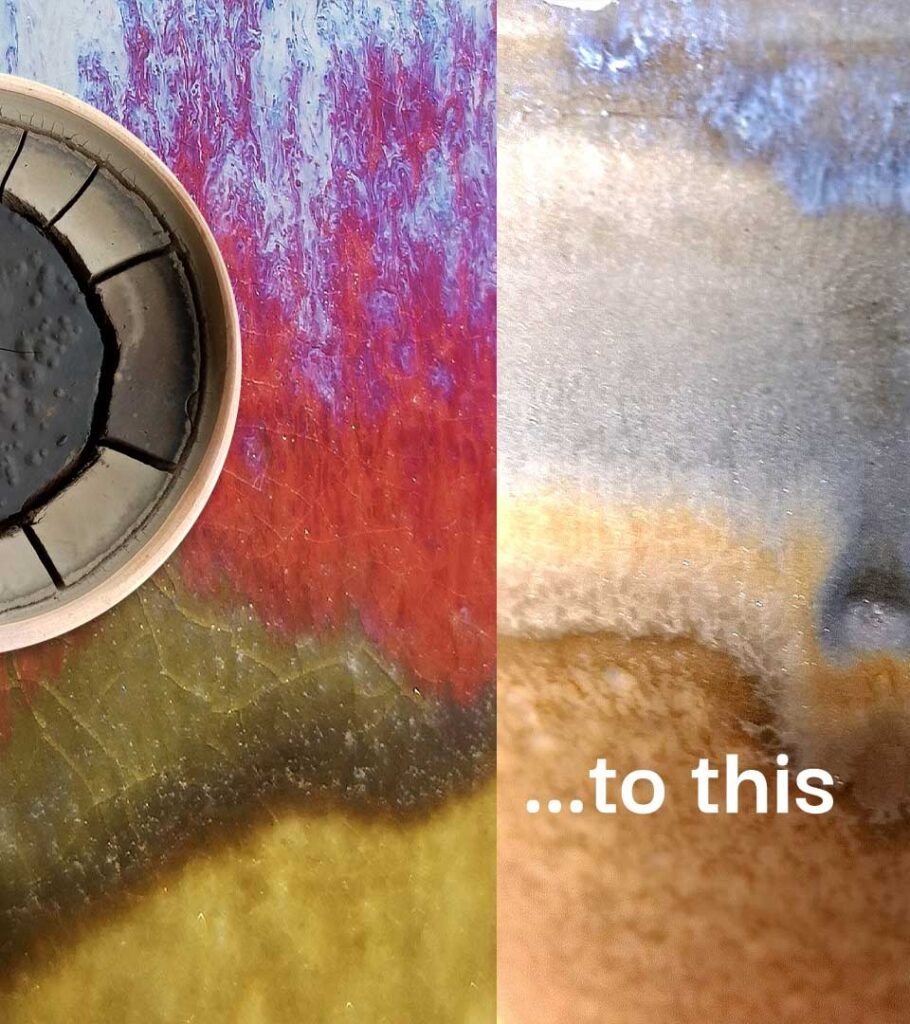
For example, copper oxide, which would typically produce pale greens or tourquoise in a glaze, is robbed of its oxygen, reverting it to simple copper which then produces a spectrum of pinks, peach bloom and oxblood reds.
All colouring oxides (iron, cobalt, titanium etc) experience the same conversion, influencing the development of colour and texture.
This process is only possible with wood / gas / oil fired kilns.
Electric kilns are not capable of it as they produce heat but no flame.
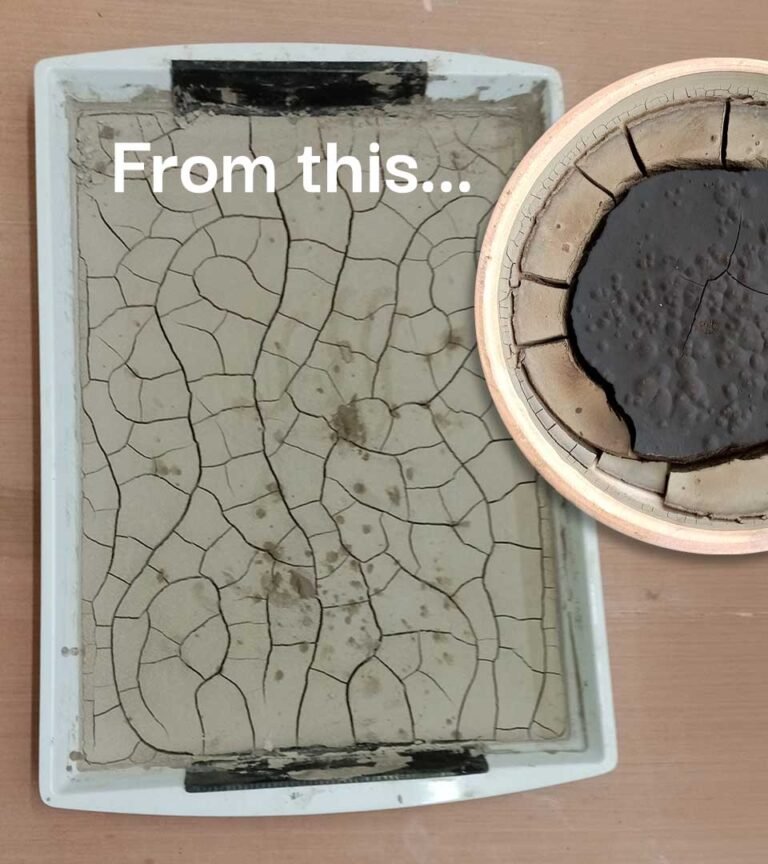
Wood Ash Glazes
Wood ash has been used as a glazing material for thousands of years. It is a significant constituant in many of the glazes used at Leith Community Pottery and large quantities are needed to produce a useful volume of glaze. Prior to the move to The Pitt, it was often a bit of a scramble to source sufficient supply. 1 kg of ash from a woodburner for example will ultimately yield between 50 and 100g of useful product, following cleaning, washing and sieving. However, here at The Pitt, Soul Water Sauna is heated by the burning of hardwood logs and the waste product is passed on to the Pottery, where it processed and turned into a valuable glaze ingredient, featured on much of the ware we produce. Thank you Soul Water!
Reclycling Clay
Clay is infinitely recyclable, so long as it remains unfired.
Wet scrap is laid out on plaster slabs to absorb excess water, then the clay is prepared for reuse.
Traditionally, this is done by hand "wedging" - a procss similar to the kneading of dough but with the precise opposite purpose. Here, we seek to remove air from the material rather than to fold it in.
Wedging is a labour intensive and physically demanding process and is a vital part of pottery making. However, over time it can result in muscle strain and RSI when excessive quantities are involved.
With over 100 students per year, the turnover at Leith Community Pottery is huge.
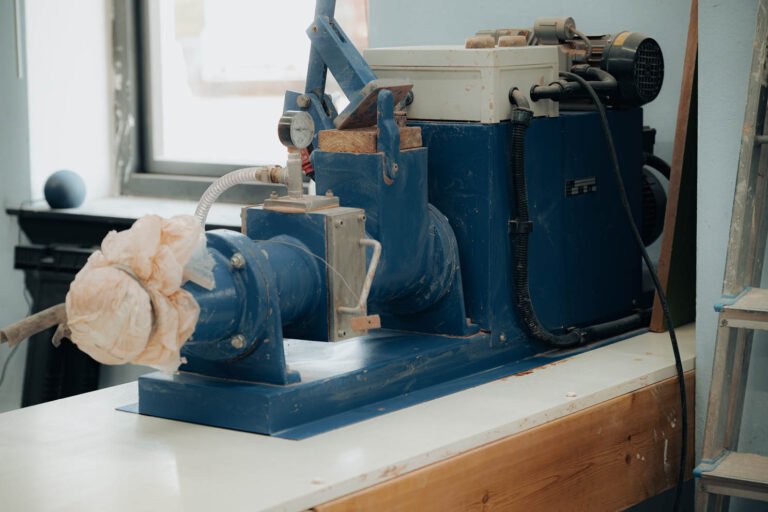
Several years ago, following 6 months of acupuncture and physio to treat RSI in the wrists and elbows, I commissioned the building of a de-airing pugmill.
This machine reconstitutes the clay, ready for re-use, by means of a large grub screw and a de-airing vacuum chamber and has become an essential labour saving device which is central to the efficient functioning of the Pottery.
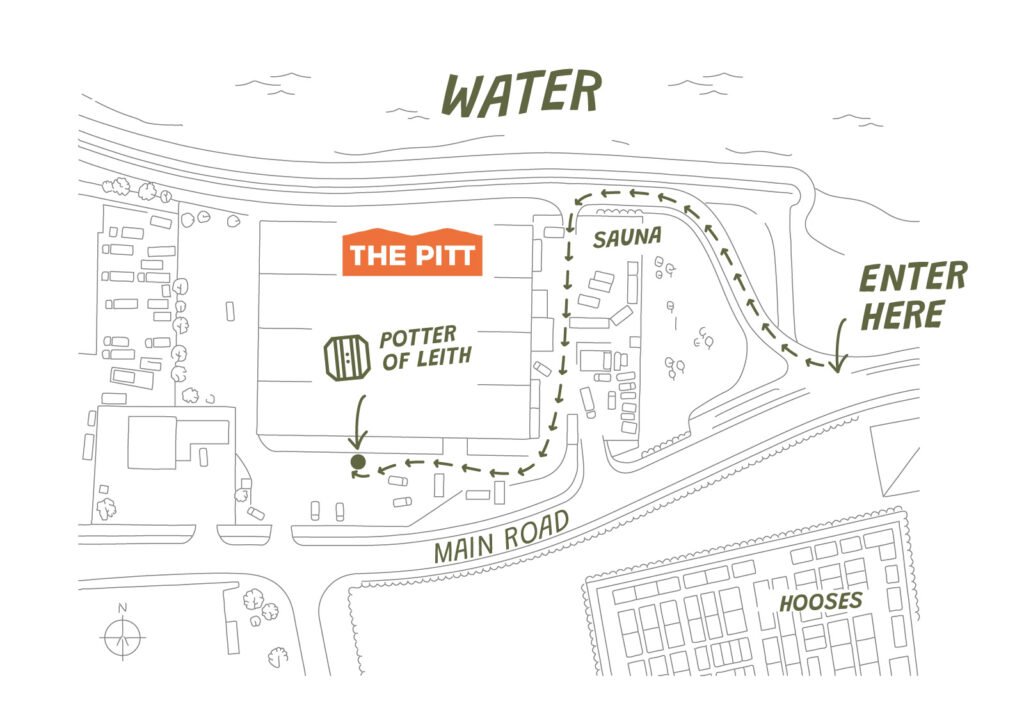
Can't find us?
The Potter of Leith is tucked away inside The Pitt in West Granton, so if it is your first visit, it can be a little easy to miss. To make things simpler, we have created a quick location guide with a map, directions, and direct links to Google Maps and Apple Maps below. If you are attending a course or collecting ceramics, we recommend giving yourself a few extra minutes on your first visit.
Use what3words to get an exact location or use the buttons below to get directions straight here.
///saying.artist.attend